
In today’s post I’m going to do a little retrospective back on June this year, when I had the pleasure of visiting the Viktorianisches Piknik at WGT 2025. Never heard of WGT? In this post I’ll talk a little about this festival and its unique characteristics.
WGT stands for Wave-Gotik-Treffen, a festival that took place for the first time as a meeting in 1992 in the city of Leipzig, with only 2,000 visitors. Since then, the “Wave Gothic meeting” has taken place annually, traditionally held during the Pentecost weekend. This year, the festival took place from June 6th to 9th and received around 19,000 visitors. Alongside M’era Luna, this festival is one of the largest in the gothic scene in Germany.
During WGT, Leipzig frames a vivid image of art made of velvet, lace, and black poetry, with subtle hints of patchouli in the air. The festival offers a wide range of attractions that take over the city of Leipzig, so that festival-goers mingle with awestruck passersby and Leipzig city residents.
The visitors can also simultaneously experience music from a wide variety of styles beloved by goths, such as EBM, industrial, post-punk, darkwave, batcave, rock, metal and medieval melodies.
The entire city becomes involved during the festival, with special exhibitions in museums full with impressive art like photography, sculptures and paintings, performances in churches, cinemas, theaters and the opera, special readings, workshops and guided tours, not only aimed at the goth audience. Readings and lectures on magic, death and dark sides of human nature, like from the crime biologist Mark Benecke or the mysterious world of poison mushrooms were some of the themes of the lectures from this year.
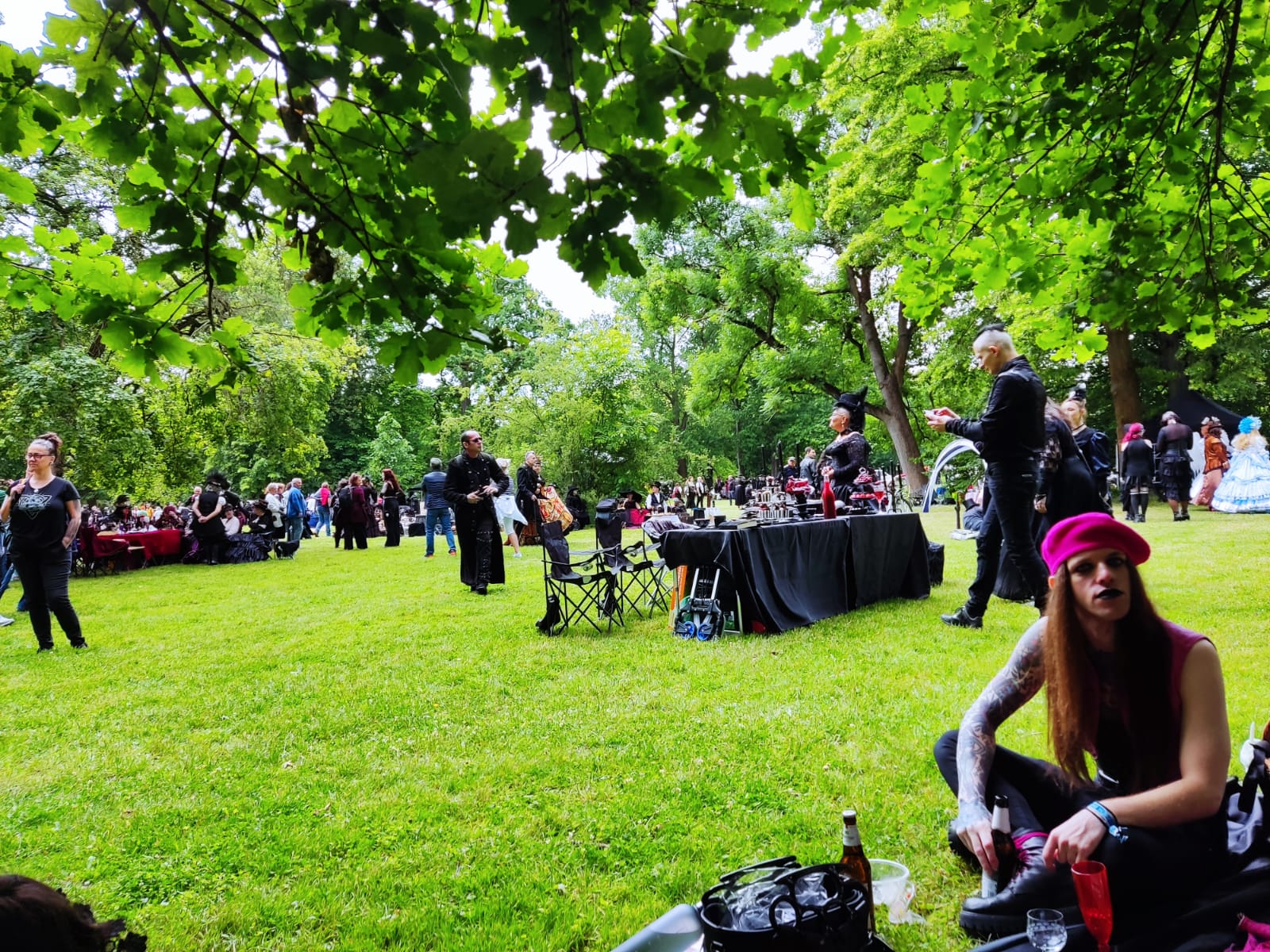
One of the festival’s highlights – and what unofficially marks its beginning – is the Victorian picnic that happens at the Clara-Zetkin-Park, which I was able to participate in for the second time and I’ll report on it in this post.
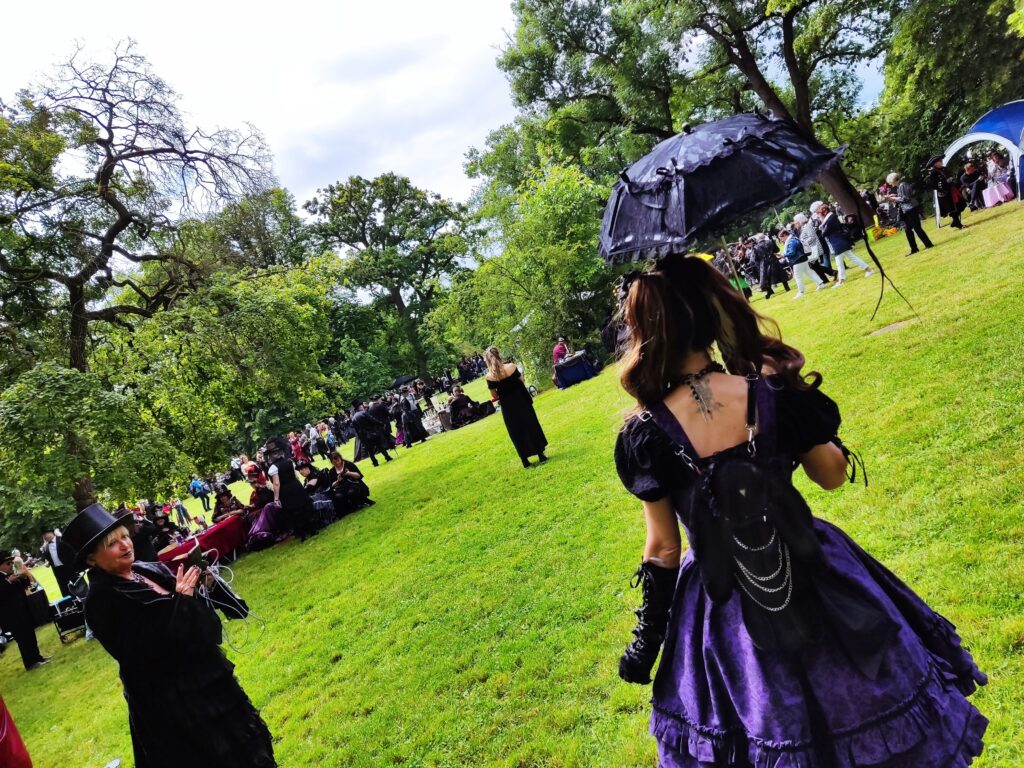
There’s no official dress code to participate at the picnic. Everyone is welcome – families and outsiders alike. One of the magical aspects about the Victorian picnic is the relaxed atmosphere and friendly mood of the participants. The picnic admission is free, so it always attracts numerous spectators on Friday afternoon, curious to see the elaborately and creatively designed outfits of the guests. It’s like, in the midst of the crowd, each person uses their clothing as a silent declaration of their values, lifestyle, and identity. While experiencing this great gathering of black robes, I remembered my studies for my college thesis, in which I wrote about subcultures and their social relationships interconnected with consumerism and identity. One of my thoughts was about how Michel Maffesoli describes the phenomenon of “being-together”:
I had the pleasure of being with a group of friends on this day. It was a little difficult to return to Leipzig after a few years because, unfortunately, I lost a friend who lived there and whom I had last seen at the WGT 2022. It was inevitable to feel a certain sadness due to the memories I had of my friend and the last time I was there. But with the kind company of my friends, I was able to have a good time during my stay there.
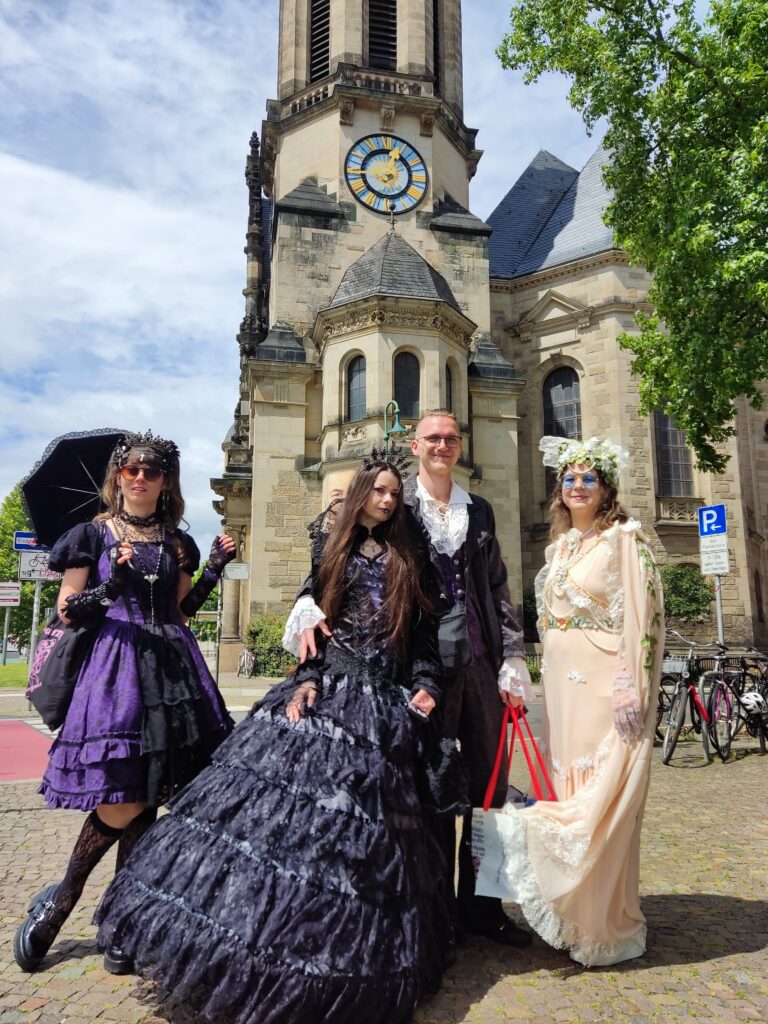
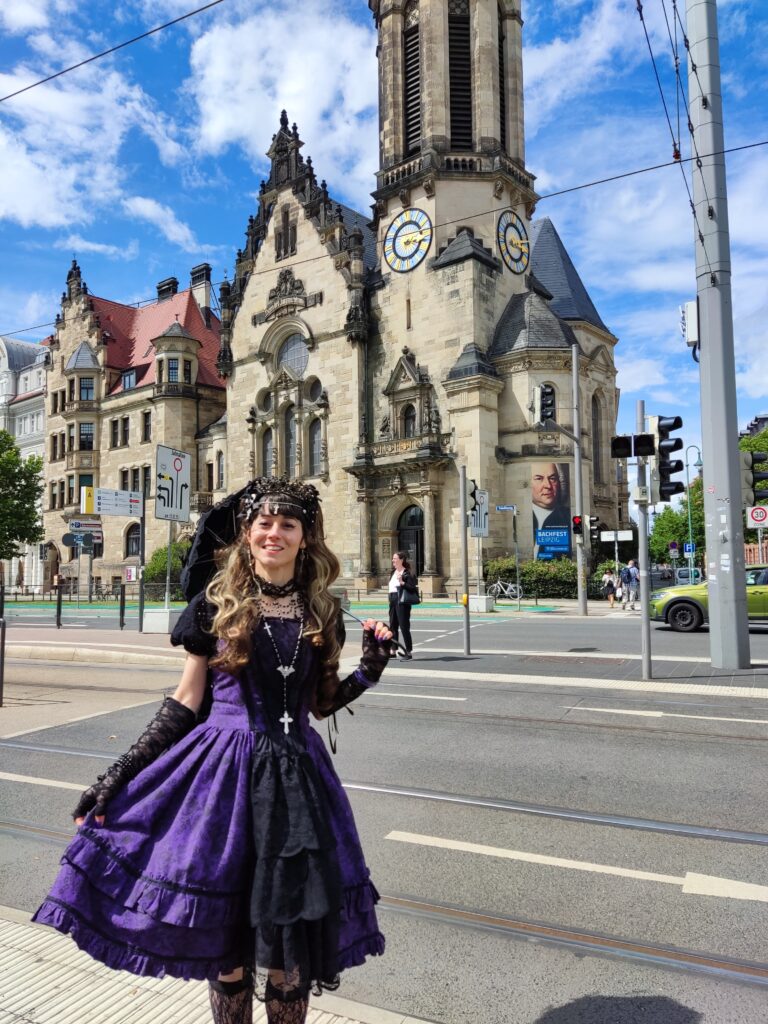
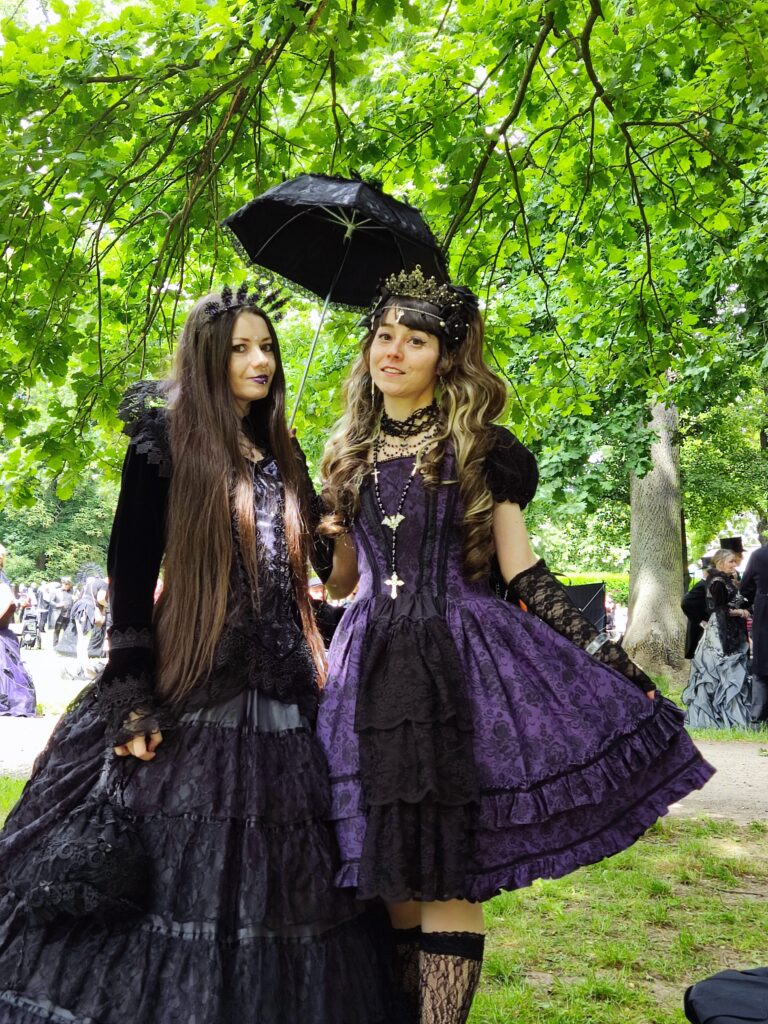
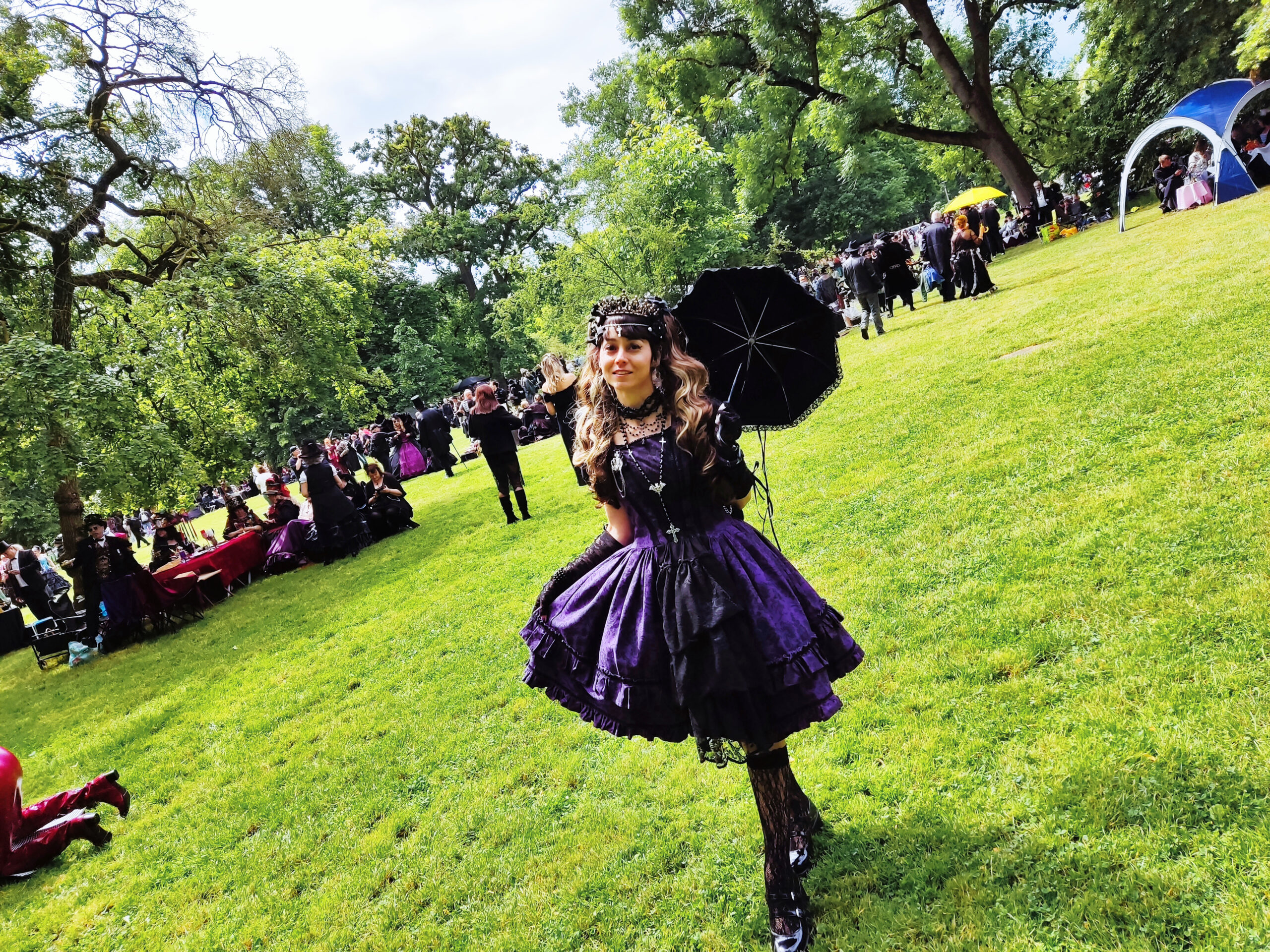
I wore the dress that I sewed myself, and it’s my favorite so far. What a pity that the supplier no longer works with this fabric, as I would love to sew it to order, since there is a high demand for it.
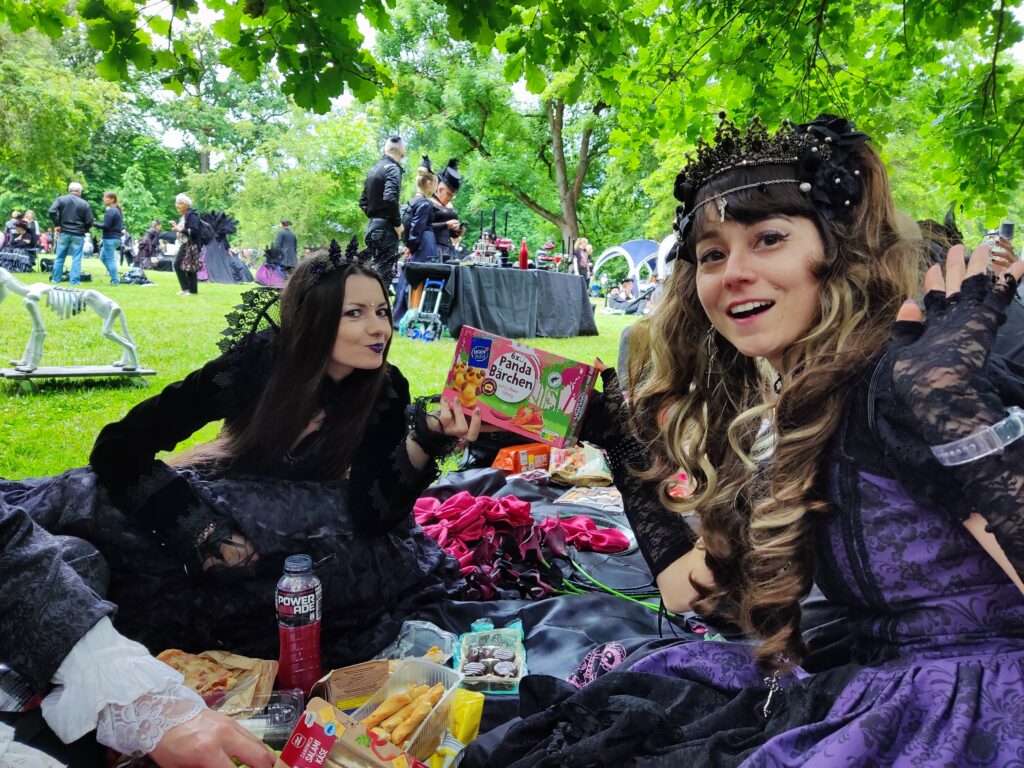
Some highlights from that day:

Besides the victorian picnic, many attractions can be experienced without tickets, like a visit to the Heidnisches Dorf (where visitors can experience a journey to the Middle Ages), a guided tour at the Alte Johannisfriedhof (Old St. John’s Cemetery) or a visit to the Gothic Pogo Festival. So that those who are curious or interested can immerse themselves deeply in the world of Gothic culture.
It may sound a bit morbid to take a guided tour of a cemetery, but the fact is that among the gothic community, the interest in old architecture often includes an admiration for cemeteries, with their unique histories embodied in the sepulchral art that each tombstone carries.
It is precisely the safeguarding of aesthetics and symbolic models that Néstor García Canclini describes as the purpose of preserving historical sites (many cemeteries can be seem as open-air museums):
Clothing in the goth scene, as in other subcultures is a means of expressing identity, points of view and attitude to the external world – and by no means a costume. From this perspective, emphasized Stuart Hall:
The atmosphere I experienced there made me reflect on some stereotypes about goths, such as the perception that goths are melancholic or closed-off people. On this topic, I can make a brief reference to Dick Hebdige, a media theorist and sociologist whose work has long been associated with the study of subcultures:
Besides the stereotype that goths are melancholic or closed-off, in reality, many goths are kind, friendly, and outgoing people. People have different personalities and character regardless of the social group they belong to. Distorted judgments about others are nothing more than the result of distorted perceptions (mainly due to a lack of information about a particular subject or social aspect). Therefore, most of the time, because they present such a striking and sometimes “aggressive” appearance, the look of goths can create a different impression than what was truly intended. What matters is wearing what you like!
Thanks for reading! I hope you keep following my posts. ✿◕ ‿ ◕✿

References:
García Canclini, Nestor (2000). Culturas híbridas: estratégias para entrar e sair da modernidade. São Paulo: Edusp.
Hall, Stuart (2006). A identidade cultural na pós modernidade. Rio de Janeiro: DP&A.
Hebdige, Dick (1979). Subculture: The Meaning of Style. London: Routledge.
Maffesoli, Michel (1998). O tempo das tribos: o declínio do indivíduo na sociedade de massa. Rio de Janeiro: Forense Universitária.
Muy interesante.
gracias! ♡ ♡